Virtual Production and Real-Time VFX: Transforming Entertainment Media
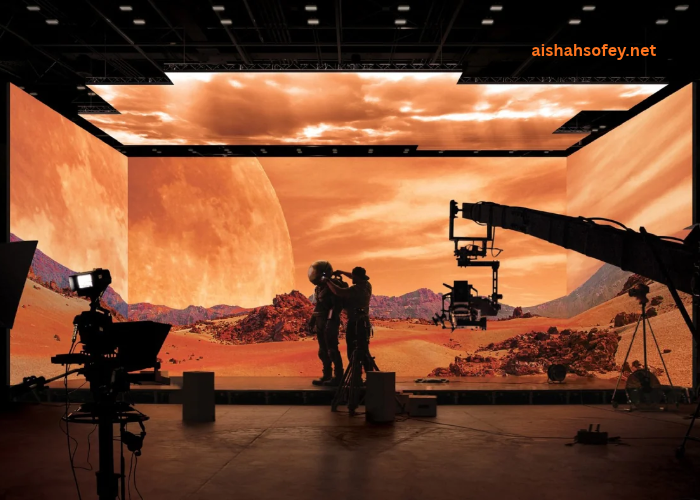
The entertainment industry is undergoing its most radical technical evolution since the transition from celluloid film to digital cinematography. For decades, complex visual effects relied entirely on green screens, forcing actors to perform in empty, brightly lit soundstages while directors waited months in post-production to see final composites. Today, high-resolution LED volume walls powered by real-time rendering engines display photorealistic 3D virtual environments live on set. In-camera visual effects (ICVFX) merge physical set pieces with dynamic digital backgrounds, revolutionizing production timelines and visual storytelling.
How In-Camera VFX and Parallax Projection Operate on Set
As entertainment production shifts toward dynamic digital engines, viewer habits have followed a similar trajectory toward interactive leisure. Outside of film sets and streaming releases, audiences regularly transition between following cinema updates, tracking media analysis and exploring digital entertainment hubs like Vegasnow Casino on handheld screens between shows. Modern media consumers expect continuous, responsive interactive experiences, whether evaluating behind-the-scenes cinematography breakthroughs or participating in real-time online leisure.
The technological core of virtual production is the LED volume – a massive, curved screen structure that wraps around a physical stage floor. Unlike flat green backgrounds, these high-density display panels project virtual worlds built in advanced real-time simulation engines.
Creating a believable illusion of infinite space relies on several synchronized engineering systems:
- Real-Time Camera Tracking: Optical infrared sensors mounted across the studio ceiling follow markers on the cinema camera, translating its exact physical focal length and positional coordinates into the rendering software.
- Perspective Frustum Parallax: The game engine renders a specific window of high-resolution geometry directly behind the actors matching the camera’s perspective, moving background elements at the precise mathematical speed required to create genuine optical depth.
- Natural Image-Based Lighting: Because the LED panels emit real-world illumination, the virtual sky and environment cast authentic reflections and ambient colors onto the actors’ skin, wardrobe and metallic props.
- Instant Digital Set Dressing: Directors can alter weather conditions, reposition digital mountains or move the virtual sun across the horizon with a single keystroke.
Infrastructure Demands and Multi-Screen Entertainment Trends
Running large-scale LED soundstages requires massive computational pipelines. High-capacity media servers must decode uncompressed multi-channel video streams across hundreds of synchronized processor nodes without dropping frames.
Comparing Production Paradigms in Modern Film and Television
Filmmakers balance virtual stages against practical location shoots and traditional chroma key workflows:
| Production Method | On-Set Flexibility | Lighting Authenticity | Post-Production Turnaround | Budget Concentration |
| LED Volume In-Camera VFX | High (Instant background control) | Exceptional (Direct ambient light) | Fast (Final pixels captured on set) | Heavy upfront asset development |
| Green / Blue Screen Chroma Key | Moderate (Scripted post adjustments) | Poor (Spill requires cleanup) | Slow (Months of paint and roto) | Backloaded post-production VFX |
| Practical On-Location Shooting | Low (Weather & daylight dependent) | Natural (Real sun and atmosphere) | Moderate (Standard editing pipeline) | Travel, transport and permit logistics |
| Full CGI Digital Animation | Total (Complete camera freedom) | Synthetic (Fully artist-crafted) | Very Slow (Lengthy render farms) | Sustained 3D modeling and animation labor |
Four Practical Habits for Managing Virtual Production Stages
Maximizing the efficiency of a virtual production set requires disciplined pre-visualization protocols:
- Lock Digital Background Assets Before Shooting: Complete all 3D environment lighting and geometry during pre-production to avoid expensive real-time changes while the full film crew is on the clock.
- Calibrate Color Spectrometry Between Wall and Camera: Regularly map LED panel phosphor output against camera sensor color profiles to prevent subtle magenta or green color shifts.
- Blend the Physical-to-Digital Horizon Seam: Scatter physical sand, gravel or matching floor materials along the base of the LED screen to hide the boundary line where the stage floor meets the virtual world.
- Maintain Fail-Safe Sensor Tracking Backups: Run redundant optical tracking systems alongside inertial camera sensors to maintain spatial lock if an overhead tracking line is temporarily blocked.
The Convergence of Filmmaking and Interactive Media
Virtual production marks a permanent shift toward real-time creative collaboration. By replacing post-production guesswork with live, tangible visual environments, filmmakers, actors and technicians can make immediate artistic decisions together on stage. As real-time game engines, camera tracking hardware and ultra-dense display technology continue to mature, the boundary between physical film sets and virtual worlds will continue to dissolve, ushering in a more efficient and visually immersive era of modern entertainment.